Tanker Tightness Builds Around US Gulf Crude メキシコ湾原油でタンカー逼迫
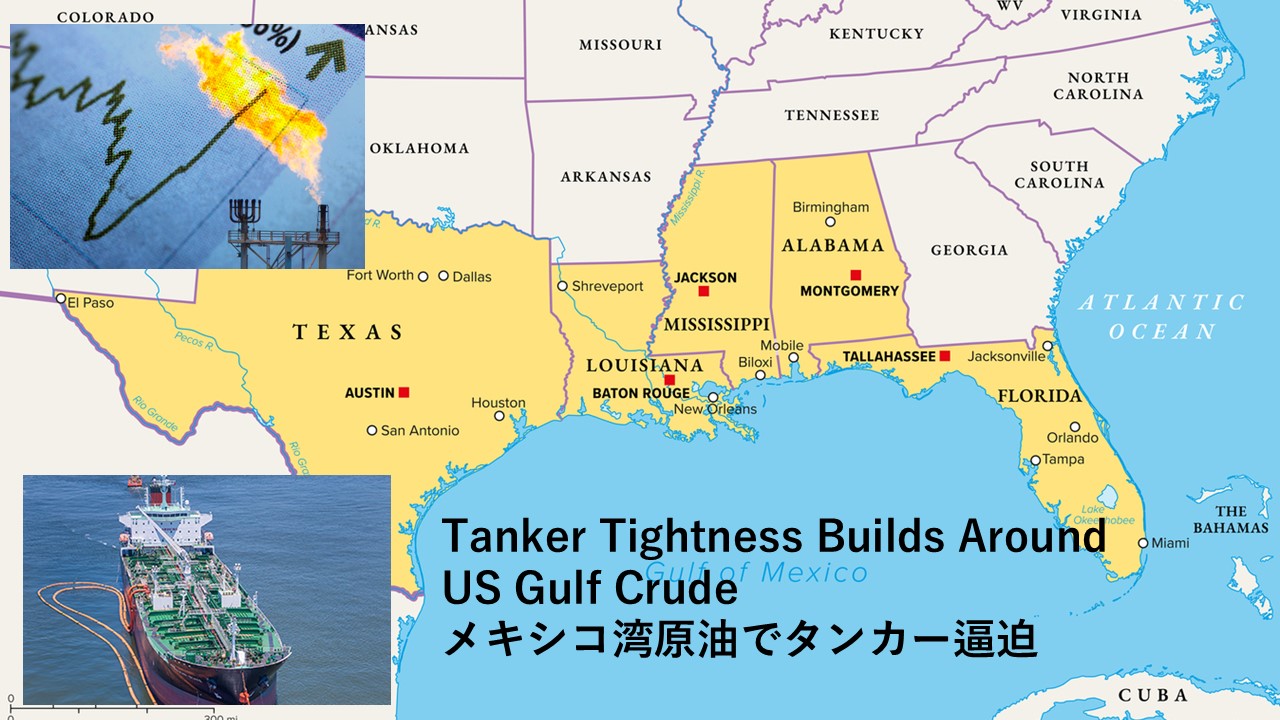
Some VLCCs linked to Japanese shipping groups are being redeployed from the Middle East, with Aframax and Suezmax charter rates at times exceeding $300,000 a day
邦船社のVLCCも中東から転配、アフラ型・スエズ型用船料が30万ドル超の局面も
As tensions in the Middle East intensify, part of the centre of gravity in crude oil transportation is rapidly shifting towards the US Gulf Coast.
■The full article covers the following points (approximately 3,000 characters)
→ An examination of how vessel deployment decisions in crude transportation are beginning to change as Middle East loadings become less stable
→ A detailed account of how Japanese shipping companies are viewing the US Gulf Coast as an alternative deployment destination for VLCCs
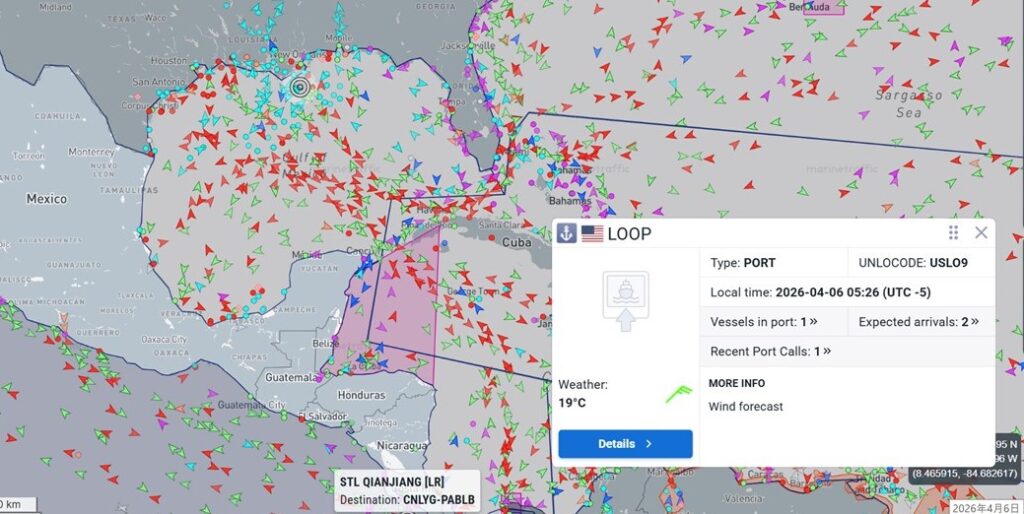
→ An explanation of the practical reasons why LOOP and Corpus Christi are attracting attention as substitute loading points
→ A review of why Aframax and Suezmax charter rates surged sharply during periods of VLCC shortage
→ An analysis, including legal and insurance considerations, of why the US Gulf Coast – rather than the North American West Coast – is emerging as the more realistic option
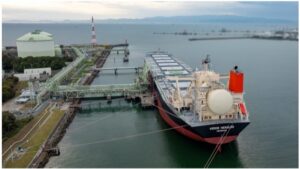
Photo courtesy of Louisiana Offshore Oil Port Services
(Read the rest in the full article, available in both English and Japanese. The Japanese article appears after the English version.)
メキシコ湾原油でタンカー逼迫
邦船社のVLCCも中東から転配、アフラ型・スエズ型用船料が30万ドル超の局面も
中東情勢の緊迫化を受け、原油輸送の一部重心が米国メキシコ湾岸へと急速に移っている。
■記事本文では以下の内容を読むことができます(記事全文約3000文字)
→中東積みの不安定化で、原油輸送の配船判断がどのように変わり始めているのかを整理
→日本の海運会社がVLCCの転配先として米メキシコ湾岸をどう見ているかを具体的に記述
→LOOPやコーパスクリスティが代替積み地として注目される実務上の理由を解説
→VLCC不足の局面でアフラ型・スエズ型の用船料が急騰した背景を検証
→北米西岸ではなくメキシコ湾岸が現実的な選択肢となる理由を法務・保険面も含めて分析
Photo courtesy of Louisiana Offshore Oil Port Services
(続きは英語と日本語で書かれた本文でお読みください。日本語の記事は英文記事に続いて掲載されています)
- Imabari Shipbuilding Strengthens Group Operations Through M&A Strategy 今治造船、M&A戦略でグループ事業を強化
- Another MOL-linked India vessel transits Hormuz, total to three 商船三井のインド関連船が新たに通過、3隻に
関連記事
-
 〆 Inside Report Diverging Views Over New Fuels, MOL’s Hashimoto responds to Maersk「LNG燃料への課金」は是か非か
 -
〆 Inside Report: Why USTR’s New Tariffs Target All Car Carriers Worldwide USTR、全世界の海運会社のPCTC対象の「なぜ」
-
〆 Union Maritime Hosts Second Anniversary Reception in Tokyo:英ユニオンマリタイムが日本事務所設立2周年記念パーティーを開催。
-
〆 Clarksons Japan Hosts Spring BBQ for Japanese Maritime Stakeholders:クラークソンズ、日本の海事関係者を招きBBQ開催
-
〆Osaka Gas makes first LNG bunkering to MOL’s dedicated iron ore carrier — 大阪ガス、商船三井のLNG燃料鉄鋼原料船に初供給
-
〆INSIDE REPORT: Imabari Shipbuilding sees 2,134 Training Program plans revoked. 技能実習法違反、今治造船だけの問題か。
-
〆 INSIDE REPORT TSUNEISHI Block Loading the Compay’s First Methanol-Fuelled Ship 常石造船、初のメタノール燃料船を建造
-
〆 Inside Report An Exodus from Japan’s Trading Houses’ Shipping Divisions: “止まらない日本の商社船舶部の人材流出

コメント