Persian Gulf Seafarers Face Prolonged Stranding as Water Use Curbs Emerge ペルシャ湾内の船員、滞留長期化「水使用の制限」も
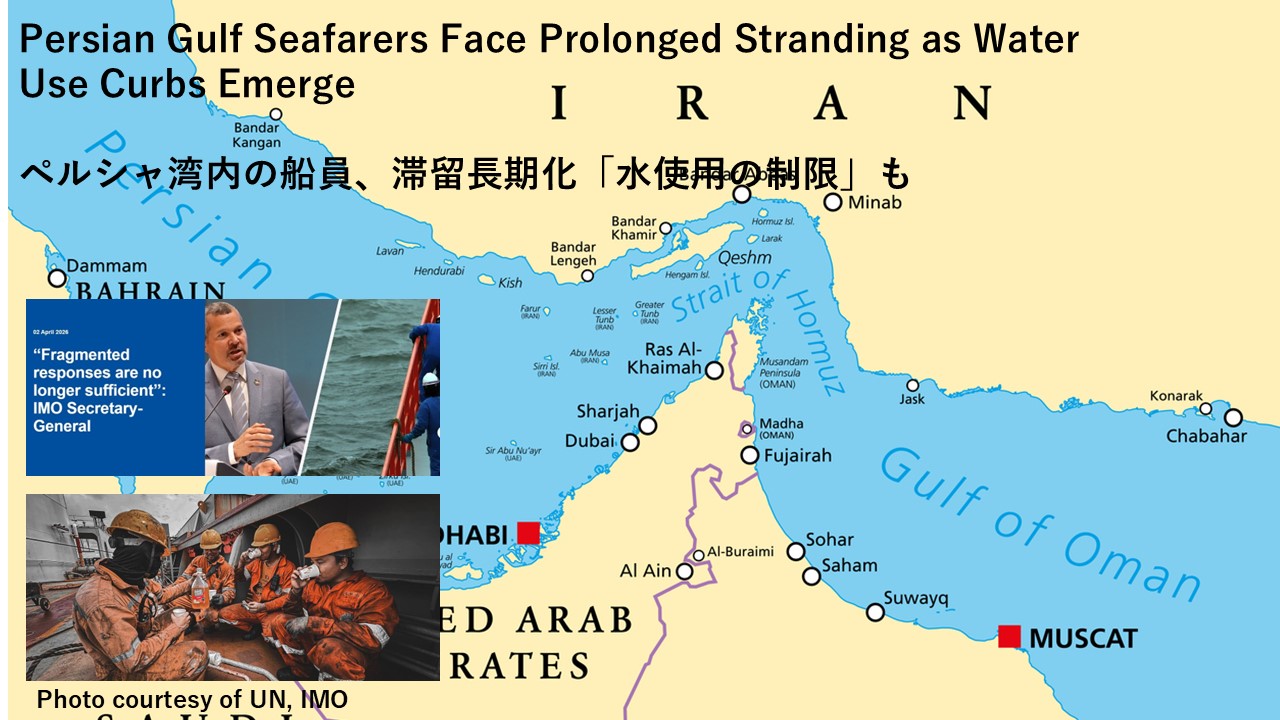
IMO and UN: “Around 20,000 remain aboard vessels”
IMO・UN「約2万人が船上にとどまる」
Amid escalating tensions in the Middle East, the dysfunction of the Strait of Hormuz is becoming protracted, intensifying humanitarian risks for seafarers remaining in the Persian Gulf. According to the International Maritime Organization (IMO) and the United Nations (UN), approximately 20,000 seafarers remain on board vessels in the area, facing shortages of supplies, fatigue, and psychological stress.
■The full article covers the following points (approximately 3,000 characters)
→The background behind the roughly 20,000 seafarers remaining in the Gulf and the realities on the ground
→An overview of the congestion, with more than 800 ocean-going vessels and up to around 2,000 affected
→The impact of water restrictions and limitations of freshwater generation systems on life on board
→Reasons why crew changes are not progressing and the dilemma of maintaining vessel operations
→The quiet ripple effects spreading across energy transportation and shipping markets
Photo courtesy of UN, IMO
(The full text continues in both English and Japanese. The Japanese article is published following the English version.)
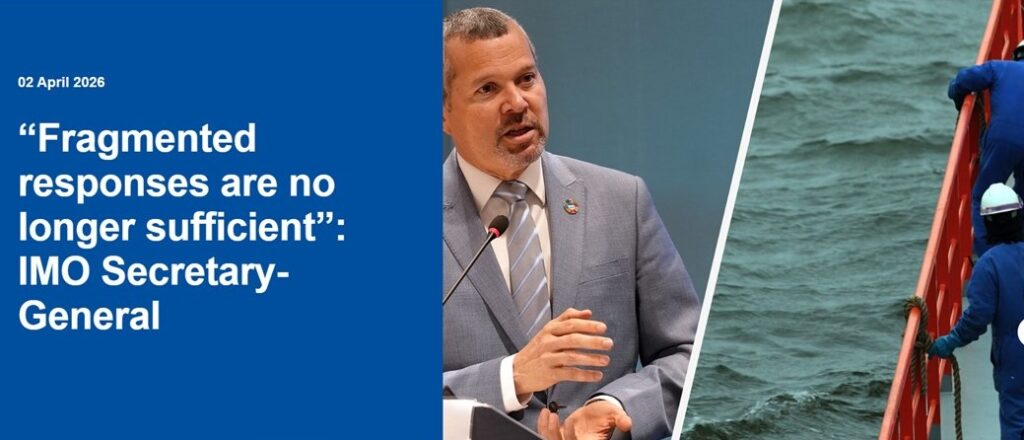
ペルシャ湾内の船員、滞留長期化「水使用の制限」も
IMO・UN「約2万人が船上にとどまる」
中東情勢の緊迫化を背景に、ホルムズ海峡の機能不全が長期化し、ペルシャ湾内にとどまる船員の人道的リスクが深刻化している。International Maritime Organization(IMO)およびUnited Nation(UN)によると、同海域では約2万人の船員が船上に残り、物資不足や疲労、心理的ストレスに直面している。
■記事本文では以下の内容を読むことができます(記事全文約3000文字)
→約2万人の船員が湾内にとどまる背景と現場の実態
→外航船800隻超、最大2000隻規模に及ぶ滞留の全体像
→水制限や造水装置の制約が船内生活に与える影響
→船員交代が進まない理由と運航維持とのジレンマ
→エネルギー輸送と海運市場に広がる静かな波及
Photo courtesy of UN, IMO
(続きは英語と日本語で書かれた本文でお読みください。日本語の記事は英文記事に続いて掲載されています)
- Can Japan’s Maritime Industry Turn India into a Business Opportunity? 日本の海運・造船、インドをビジネスチャンスにできるか
- NYK and MTI Launch Seafarer-Led Decarbonisation Trial with Signol日本郵船とMTI、英Signolと船員主導の脱炭素トライアル
関連記事
-
 〆 Inside Report Diverging Views Over New Fuels, MOL’s Hashimoto responds to Maersk「LNG燃料への課金」は是か非か
 -
〆 Inside Report: Why USTR’s New Tariffs Target All Car Carriers Worldwide USTR、全世界の海運会社のPCTC対象の「なぜ」
-
〆 Union Maritime Hosts Second Anniversary Reception in Tokyo:英ユニオンマリタイムが日本事務所設立2周年記念パーティーを開催。
-
〆 Clarksons Japan Hosts Spring BBQ for Japanese Maritime Stakeholders:クラークソンズ、日本の海事関係者を招きBBQ開催
-
〆Osaka Gas makes first LNG bunkering to MOL’s dedicated iron ore carrier — 大阪ガス、商船三井のLNG燃料鉄鋼原料船に初供給
-
〆INSIDE REPORT: Imabari Shipbuilding sees 2,134 Training Program plans revoked. 技能実習法違反、今治造船だけの問題か。
-
〆 INSIDE REPORT TSUNEISHI Block Loading the Compay’s First Methanol-Fuelled Ship 常石造船、初のメタノール燃料船を建造
-
〆 Inside Report An Exodus from Japan’s Trading Houses’ Shipping Divisions: “止まらない日本の商社船舶部の人材流出

コメント