Government backs pipelines, reinsurance; shipping questions impact 政府、パイプライン・再保険支援へ、海運は実効性を注視

Hormuz bypass plans put Bab el-Mandeb risks and VLCC deployment in focus
ホルムズ迂回策、バブ・エル・マンデブとVLCC配船が新たな焦点
According to multiple sources, it emerged by 26 August that the Japanese government is moving in earnest to secure crude oil procurement routes that do not pass through the Strait of Hormuz, in response to disruption in the Middle East.
Maritime Bridge Japan (MBJ) interviewed shipping companies, trading houses and insurance industry sources by the evening of 25 August. While some welcomed the government’s direction in supporting alternative crude oil transportation routes and insurance arrangements, others took a cautious view of its effectiveness, saying that “building a pipeline does not in itself solve the Hormuz problem” and questioning “how far government-backed reinsurance can actually support vessel operations”.
■The full article covers the following points (approximately 2,000 Japanese characters)
→ The navigational challenges that remain beyond the Strait of Hormuz after crude is transported through Saudi Arabia’s East-West Pipeline
→ How should the risks in the Bab el-Mandeb Strait be assessed when transporting crude from Yanbu to Asia?
→ Is it correct that “VLCCs cannot transit the Suez Canal”? Draft restrictions and the practical use of the SUMED pipeline
→ Japanese government support for reinsurance: differences between the country’s previous scheme and the war risks involved this time
→ “Having insurance” and “being able to sail” are different matters: how shipping, trading house and insurance industry sources assess the effectiveness of the measures
(Photo courtesy of the Prime Minister’s Office and iStock)
(Continue reading in the full paid article, available in English and Japanese. The Japanese article follows the English version.)
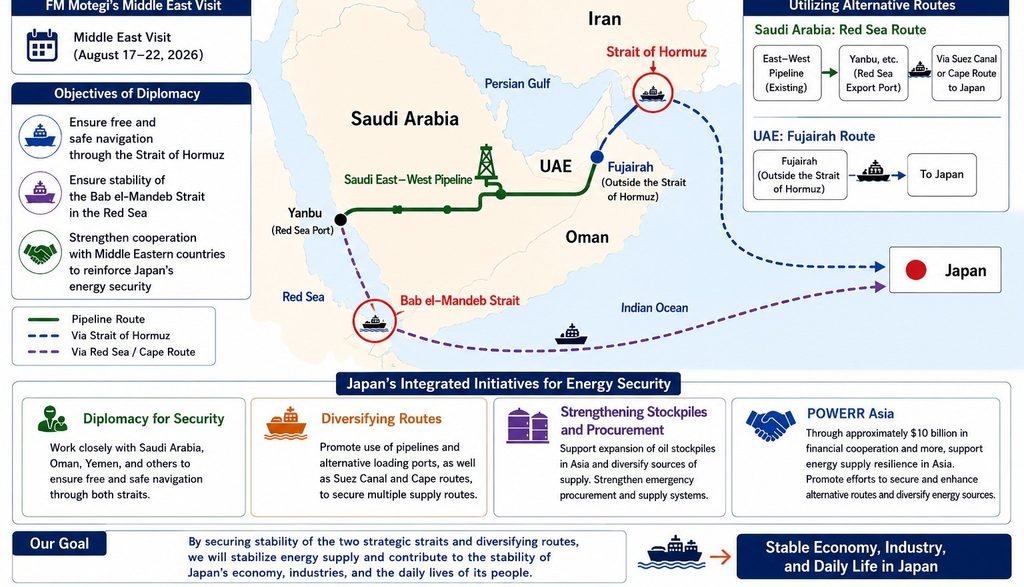
(photo=FM Motegi’s middle east visit during last week)
政府がパイプライン・再保険支援へ、海運現場からは「実効性」に課題も
ホルムズ迂回策、バブ・エル・マンデブとVLCC配船が新たな焦点
複数の関係者によると、政府が中東情勢の混乱を踏まえ、ホルムズ海峡を経由しない原油調達ルートの確保に本格的に乗り出すことが26日までに明らかになった。
Maritime Bridge Japan(MBJ)が25日夕までに海運会社、商社、保険関係者に取材したところ、政府が原油輸送の代替ルート確保や保険面で支援する方向性を評価する声が聞かれた。一方、「パイプラインを造ればホルムズ問題が解決するわけではない」「政府による再保険が実際の船舶運航をどこまで後押しできるのか」と、その実効性を慎重に見る意見もある。
■記事本文では以下の内容を読むことができます(記事全文約2,000文字)
→ サウジの東西パイプラインでホルムズ海峡を迂回、その先に残る航路上の課題
→ ヤンブーからアジアへ向かう場合、バブ・エル・マンデブ海峡のリスクをどう考えるか
→ 「VLCCはスエズを通れない」は正しいのか、喫水制約とSUMEDを使った輸送の実態
→ 政府による再保険支援、日本の過去の制度と今回の戦争リスクとの違い
→ 「保険がある」と「船が動く」は別問題、海運・商社・保険関係者が見る実効性
(写真提供=首相官邸、iStock)
(続きは英語と日本語で書かれた有料版の本文でお読みください。日本語の記事は英文記事に続いて掲載されています)
- 28-year-old bulker OCEAN WINNER sinks, 22 missing 船齢約28年のバルカー「OCEAN WINNER」沈没、22人不明
- CK Hutchison seeks more than $1.5bn in damages from Panama CKハチソン、パナマに15億ドル超の賠償請求
関連記事
-
 〆 Inside Report Diverging Views Over New Fuels, MOL’s Hashimoto responds to Maersk「LNG燃料への課金」は是か非か
-
〆 Inside Report: Why USTR’s New Tariffs Target All Car Carriers Worldwide USTR、全世界の海運会社のPCTC対象の「なぜ」
-
〆 Union Maritime Hosts Second Anniversary Reception in Tokyo:英ユニオンマリタイムが日本事務所設立2周年記念パーティーを開催。
-
〆 Clarksons Japan Hosts Spring BBQ for Japanese Maritime Stakeholders:クラークソンズ、日本の海事関係者を招きBBQ開催
-
〆Osaka Gas makes first LNG bunkering to MOL’s dedicated iron ore carrier — 大阪ガス、商船三井のLNG燃料鉄鋼原料船に初供給
-
〆INSIDE REPORT: Imabari Shipbuilding sees 2,134 Training Program plans revoked. 技能実習法違反、今治造船だけの問題か。
-
〆 INSIDE REPORT TSUNEISHI Block Loading the Compay’s First Methanol-Fuelled Ship 常石造船、初のメタノール燃料船を建造
-
〆 Inside Report An Exodus from Japan’s Trading Houses’ Shipping Divisions: “止まらない日本の商社船舶部の人材流出

コメント