Japan’s legal recognition of eBLs to affect tramp shipping practices 電子船荷証券の法制化、不定期船の取引実務にも影響
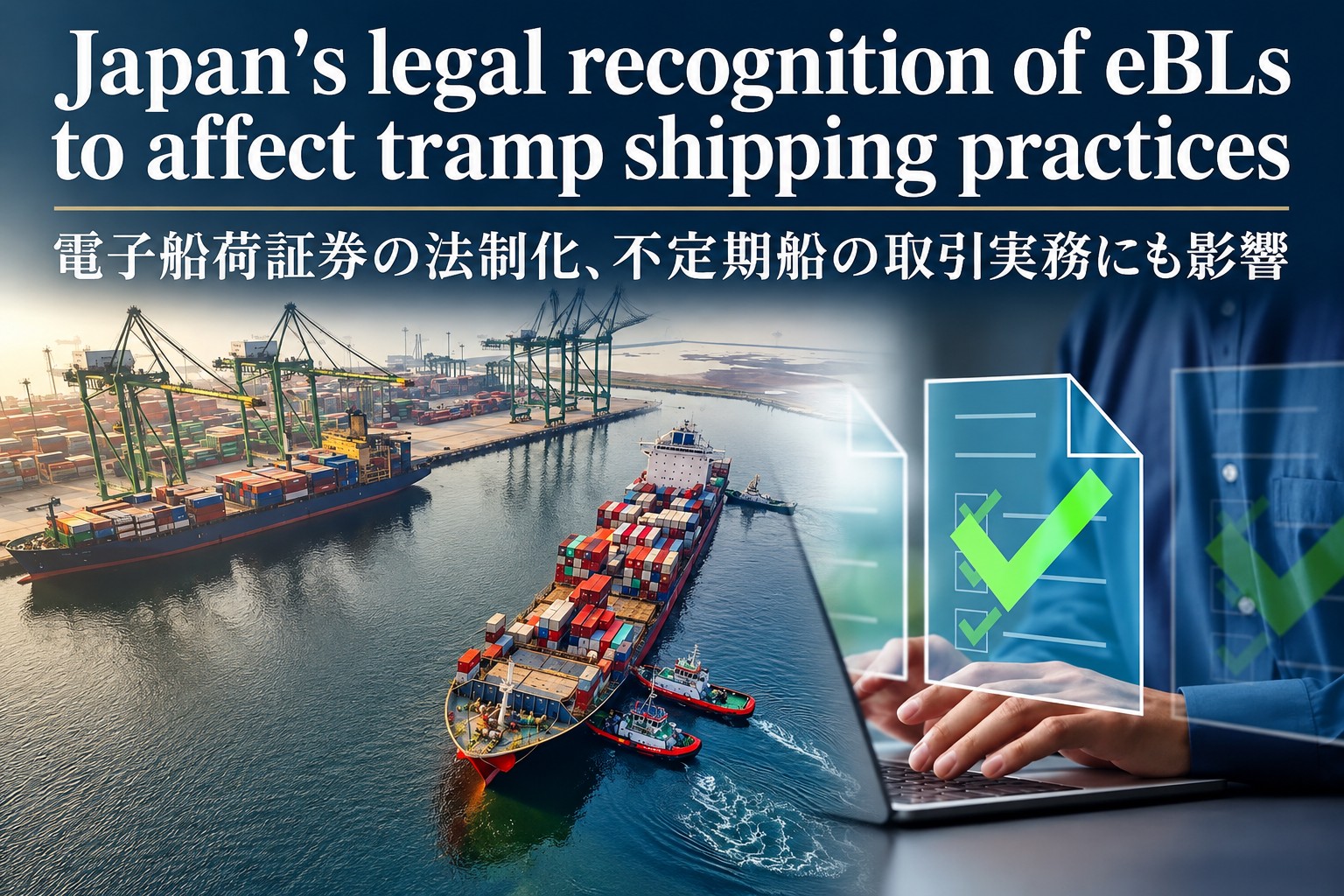
Japan’s cabinet approves Commercial Code amendment, putting LOIs and charterparty terms for bulkers and tankers in focus
政府が商法改正案を決定、バルカー・タンカーのLOIや用船契約に焦点
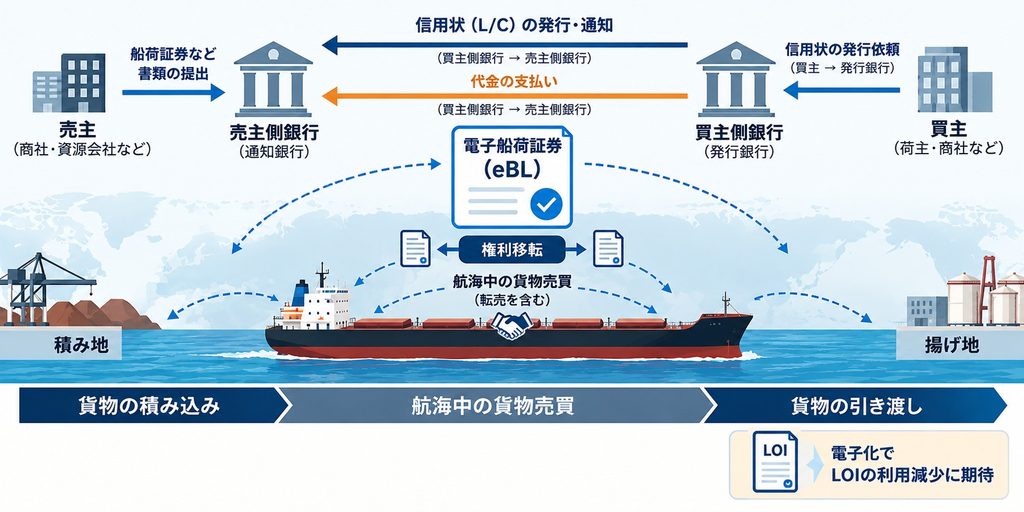
The Japanese government’s cabinet decision on 23 October to establish a legal framework for electronic bills of lading (eBLs) will have implications for commercial practices not only in container shipping but also in tramp shipping and the resources and energy trade, involving vessels carrying iron ore, coal, grain and crude oil.
In the international shipping industry, BIMCO has already developed a charterparty clause covering electronic bills of lading. Attention is now turning to how Japan’s legal reform will affect the practices of shipowners, charterers, cargo owners, trading houses and banks.
■ The full article covers the following topics (approximately 2,000 Japanese characters)
→ How will the legal recognition of electronic bills of lading change the tramp shipping business for Japanese shipowners?
→ When original bills of lading fail to arrive: the risks of cargo delivery against letters of indemnity (LOIs) that persist in bulker and tanker trades.
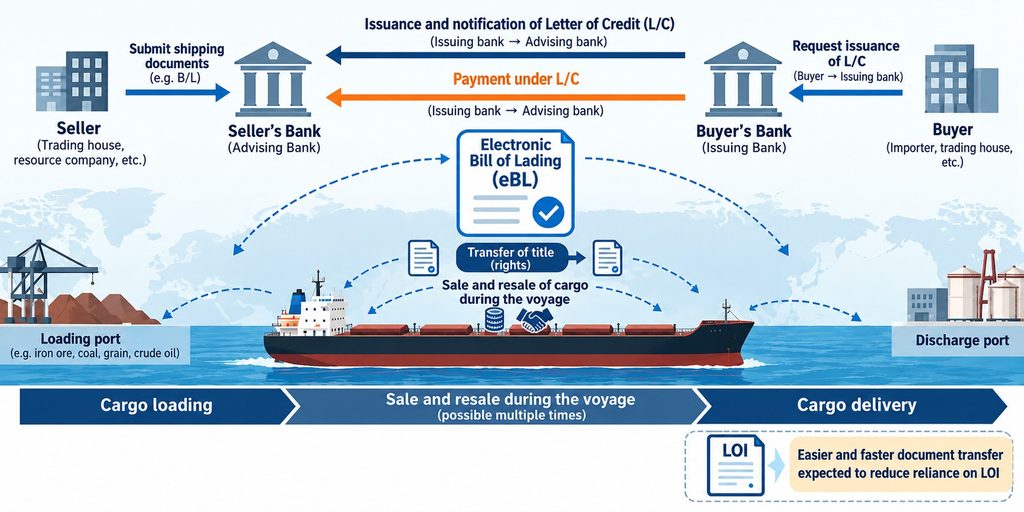
→ Cargoes bought and resold during voyages: how will digitalisation change the transfer of title and settlement procedures?
→ eBL usage among survey respondents stands at 51.1%, but only 22.2% among bank respondents. What barriers remain to wider adoption?
→ BIMCO charterparty clauses and P&I insurance: the liabilities and costs shipowners need to examine as shipping goes digital.
(Continue reading the full article in the paid edition, available in English and Japanese. The Japanese version appears after the English article.)
電子船荷証券の法制化、不定期船の取引実務にも影響
政府が商法改正案を決定、バルカー・タンカーのLOIや用船契約に焦点
政府が23日に閣議決定した電子船荷証券(eBL)の法制化は、コンテナ船に加え、鉄鉱石、石炭、穀物、原油などを輸送する不定期船や資源エネルギービジネスの取引実務にも関わる制度整備となる。
国際海運業界ではBIMCOが電子船荷証券に対応した用船契約条項を整備しており、日本の法制化が船主、用船者、荷主、商社、銀行の実務にどのような変化をもたらすかが注目される。
■記事本文では以下の内容を読むことができます(記事全文約2,000文字)
→ 電子船荷証券の法制化で、日本船主の不定期船ビジネスはどう変わるのか。
→ 原本船荷証券が届かない――バルカー・タンカーに残るLOI引渡しのリスク。
→ 航海中に売買・転売される貨物。電子化は権利移転と決済をどう変えるのか。
→ 電子船荷証券の利用経験は51.1%、銀行は22.2%。普及を阻む壁とは。
→ BIMCOの用船契約条項とP&I保険。電子化で船主が確認すべき責任と費用。
(続きは英語と日本語で書かれた有料版の本文でお読みください。日本語の記事は英文記事に続いて掲載されています)
- Jeremy Nixon: Shipping serves global trade but cannot be its slave ONE前CEOニクソン氏「海運は世界貿易の奴隷にはなれない」
- Greek Capital Tankers adopts balloon financing for 11 VLCCs ギリシャのキャピタル・タンカーズ、VLCC11隻にバルーン返済方式採用
関連記事
-
 〆 Inside Report Diverging Views Over New Fuels, MOL’s Hashimoto responds to Maersk「LNG燃料への課金」は是か非か
-
〆 Inside Report: Why USTR’s New Tariffs Target All Car Carriers Worldwide USTR、全世界の海運会社のPCTC対象の「なぜ」
-
〆 Union Maritime Hosts Second Anniversary Reception in Tokyo:英ユニオンマリタイムが日本事務所設立2周年記念パーティーを開催。
-
〆 Clarksons Japan Hosts Spring BBQ for Japanese Maritime Stakeholders:クラークソンズ、日本の海事関係者を招きBBQ開催
-
〆Osaka Gas makes first LNG bunkering to MOL’s dedicated iron ore carrier — 大阪ガス、商船三井のLNG燃料鉄鋼原料船に初供給
-
〆INSIDE REPORT: Imabari Shipbuilding sees 2,134 Training Program plans revoked. 技能実習法違反、今治造船だけの問題か。
-
〆 INSIDE REPORT TSUNEISHI Block Loading the Compay’s First Methanol-Fuelled Ship 常石造船、初のメタノール燃料船を建造
-
〆 Inside Report An Exodus from Japan’s Trading Houses’ Shipping Divisions: “止まらない日本の商社船舶部の人材流出