IRGC releases mine-avoidance routing map for Strait of Hormuz shipping イラン革命防衛隊、ホルムズ海峡で機雷回避の航路図公開

Traffic guided toward narrow coastal lanes along Iran; toll proposal also emerges
Around 42 Japan-linked vessels remain stranded inside the Gulf
イラン沿岸寄りの狭水道へ誘導、通航料構想も浮上
日本関係船はなお約42隻が湾内に足止め
According to Iranian state and semi-state media, the naval arm of the Islamic Revolutionary Guard Corps (IRGC) on 9 April local time released an alternative routing map for vessels transiting the Strait of Hormuz, aimed at avoiding contact with sea mines.
■The full article covers the following points (approx. 3,000 characters)
→What has changed behind the “reopening” of the Strait of Hormuz. A structured analysis of the new routing presented by the IRGC
→Does the proposed “$1 per barrel” transit fee have practical viability? An estimate of the impact on VLCC transport costs
→Why around 42 Japan-linked vessels are still unable to move. An explanation of the barriers in insurance, contracts and operational practice
→US sanctions exposure risk also emerging. Why private-sector decision-making alone has clear limitations
→A Strait of Hormuz that is “open, but not free”. Assessing the new phase facing Japan’s energy transportation
Map: Screengrab/Al Jazeera
(The full article is available in both English and Japanese. The Japanese version follows the English article.)
イラン革命防衛隊、ホルムズ海峡で機雷回避の航路図公開
イラン沿岸寄りの狭水道へ誘導、通航料構想も浮上
日本関係船はなお約42隻が湾内に足止め
イランの国営・準国営メディアによると、イスラム革命防衛隊(IRGC)海軍は現地時間9日、ホルムズ海峡を通過する船舶向けに、機雷接触リスクを回避するための代替航路図を公表した。
■記事本文では以下の内容を読むことができます(記事全文約3000文字)
→ホルムズ海峡「再開」の裏で何が変わったのか。IRGCが示した新航路の実態を整理
→「1バレル1ドル」通航料構想は現実味があるのか。VLCC輸送コストへの影響を試算
→なぜ日本関係船約42隻はなお動けないのか。保険・契約・運航実務の壁を解説
→米国の制裁対象リスクも浮上。民間企業だけでは判断に限界がある理由とは
→「開いていても自由ではない」ホルムズ海峡へ。日本のエネルギー輸送が直面する新局面を読む
Map: Screengrab/Al Jazeera
(続きは英語と日本語で書かれた本文でお読みください。日本語の記事は英文記事に続いて掲載されています)
- Kumiai Navigation delivers dual-fuel VLGC for AltaGas クミアイ・ナビゲーション、AltaGas向けLPG二元燃料VLGCが竣工
- Free Entry as Ship Management Forum 2026 Nears at SGX 入場無料、開催迫る―国際船舶管理フォーラム2026、SGXで開催
関連記事
-
 〆 Braking News, Massive Explosion Hits Iran’s Key Hub: 4 Dead, 速報:イランの国際物流の要衝、「最重要港湾」で大規模爆発
 -
〆Breaking News〆SHIPS for America Act Reintroduced by US Lawmakers 船舶法、米議員が再発議。日本など同盟国の船舶を米国籍として短期利用
-
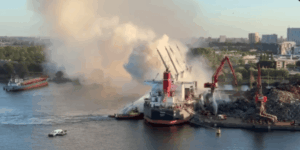
Greek Supramax Bulker Catches Fire in Amsterdam Port/ギリシャ海運のスープラマックス、アムステルダム港で大規模火災
-
〆MSC Antonia Grounded in the Red Sea — Suspected Victim of GPS Spoofingm/MSCアントニア、GPSスプーフィング被害の疑い
-
〆Japan Mulls Creation of Japan-US Shipbuilding Revitalisation Fund — 日本政府、「日米造船再生ファンド」設立を検討
-
“Shipbuilding Nippon” to Take Centre Stage at G7 Summit/造船ニッポン、G7で日米首脳会談の主要テーマに
-
〆 EV-Fitted PCTC ‘Morning Midas’ Catches Fire off the Coast of AlaskaEV積載のPCTCモーニング・ミダス、アラスカ沖で火災発生
-
〆US NTSB Releases VDR Audio from Dali – ‘Moments of Lost Control’米NTSB、ダリ号のVDR音声を公開 “制御不能の瞬間”を記録


コメント