German FSRUs: will shift to ships reshape LNG market? 独FSRU拡大、「パイプラインから船へ」がLNG船市場を変えるか

Nord Stream exit exposes European LNG procurement to new geopolitical risks
ノルドストリーム依存脱却、欧州LNG調達に新たな地政学リスク
Geopolitical risks surrounding Europe’s natural gas procurement are spreading from “north” to “south”. Germany has moved away from its dependence on Nord Stream, the subsea gas pipeline linking Russia and Germany through the Baltic Sea, and has deployed a series of floating storage and regasification units (FSRUs).
■The full article covers the following points (approximately 2,000 Japanese characters)
→ Germany has deployed a series of FSRUs following the halt of Nord Stream, accelerating the shift “from pipelines to ships”
→ Germany plans to expand its LNG import capacity from about 15bn cubic metres in 2025 to about 25bn cubic metres in 2027
→ About 96% of Germany’s LNG imports came from the US in 2025, reflecting changes in Europe’s natural gas procurement structure
→ About 20% of global LNG trade passes through the Strait of Hormuz, with supply disruptions caused by Middle East tensions also affecting procurement in Europe and Asia
→ Rising European LNG imports are a tailwind for the LNG carrier market, but with newbuilding deliveries continuing, the focus is shifting beyond volumes to tonne-mile demand
(The full article is available to subscribers in English and Japanese. The Japanese version follows the English article.)
独FSRU拡大、「パイプラインから船へ」がLNG船市場を変えるか
ノルドストリーム依存脱却、欧州LNG調達に新たな地政学リスク
欧州の天然ガス調達を巡る地政学リスクが「北」から「南」へ広がっている。ドイツはロシアからバルト海を経由する海底ガスパイプライン「ノルドストリーム」への依存から脱却し、浮体式LNG貯蔵・再ガス化設備(FSRU)を相次いで整備した。
■記事本文では以下の内容を読むことができます(記事全文約2,000文字)
→ ノルドストリーム停止を機に、ドイツはFSRUを相次いで整備、「パイプラインから船へ」の転換が進む
→ ドイツのLNG輸入能力は2025年の約150億立方メートルから、2027年には約250億立方メートルへ拡大する計画
→ 2025年のドイツのLNG輸入は約96%が米国産、欧州の天然ガス調達構造にも変化
→ 世界のLNG貿易量の約20%が通過するホルムズ海峡、中東情勢による供給減少が欧州・アジアの調達にも影響
→ 欧州のLNG輸入拡大はLNG船市場に追い風も、新造船供給が続く中、今後の焦点は輸送量だけでなく「トンマイル」へ
(続きは英語と日本語で書かれた有料版の本文でお読みください。日本語の記事は英文記事に続いて掲載されています)
- Toyo Construction deploys Japan's largest-class cable-laying vessel 東洋建設、国内最大級の自航式ケーブル敷設船を投入
- VLCC earnings near $500,000 as Sinokor heads for Persian Gulf VLCC、中東―極東50万ドルに迫る、シノコー船がペルシャ湾へ
関連記事
-
 〆 Inside Report Diverging Views Over New Fuels, MOL’s Hashimoto responds to Maersk「LNG燃料への課金」は是か非か
 -
〆 Inside Report: Why USTR’s New Tariffs Target All Car Carriers Worldwide USTR、全世界の海運会社のPCTC対象の「なぜ」
-
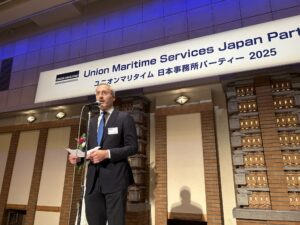
〆 Union Maritime Hosts Second Anniversary Reception in Tokyo:英ユニオンマリタイムが日本事務所設立2周年記念パーティーを開催。
-
〆 Clarksons Japan Hosts Spring BBQ for Japanese Maritime Stakeholders:クラークソンズ、日本の海事関係者を招きBBQ開催
-
〆Osaka Gas makes first LNG bunkering to MOL’s dedicated iron ore carrier — 大阪ガス、商船三井のLNG燃料鉄鋼原料船に初供給
-
〆INSIDE REPORT: Imabari Shipbuilding sees 2,134 Training Program plans revoked. 技能実習法違反、今治造船だけの問題か。
-
〆 INSIDE REPORT TSUNEISHI Block Loading the Compay’s First Methanol-Fuelled Ship 常石造船、初のメタノール燃料船を建造
-
〆 Inside Report An Exodus from Japan’s Trading Houses’ Shipping Divisions: “止まらない日本の商社船舶部の人材流出


コメント