Loss of steering: can the bridge respond? 操舵不能、その時ブリッジは動けるか
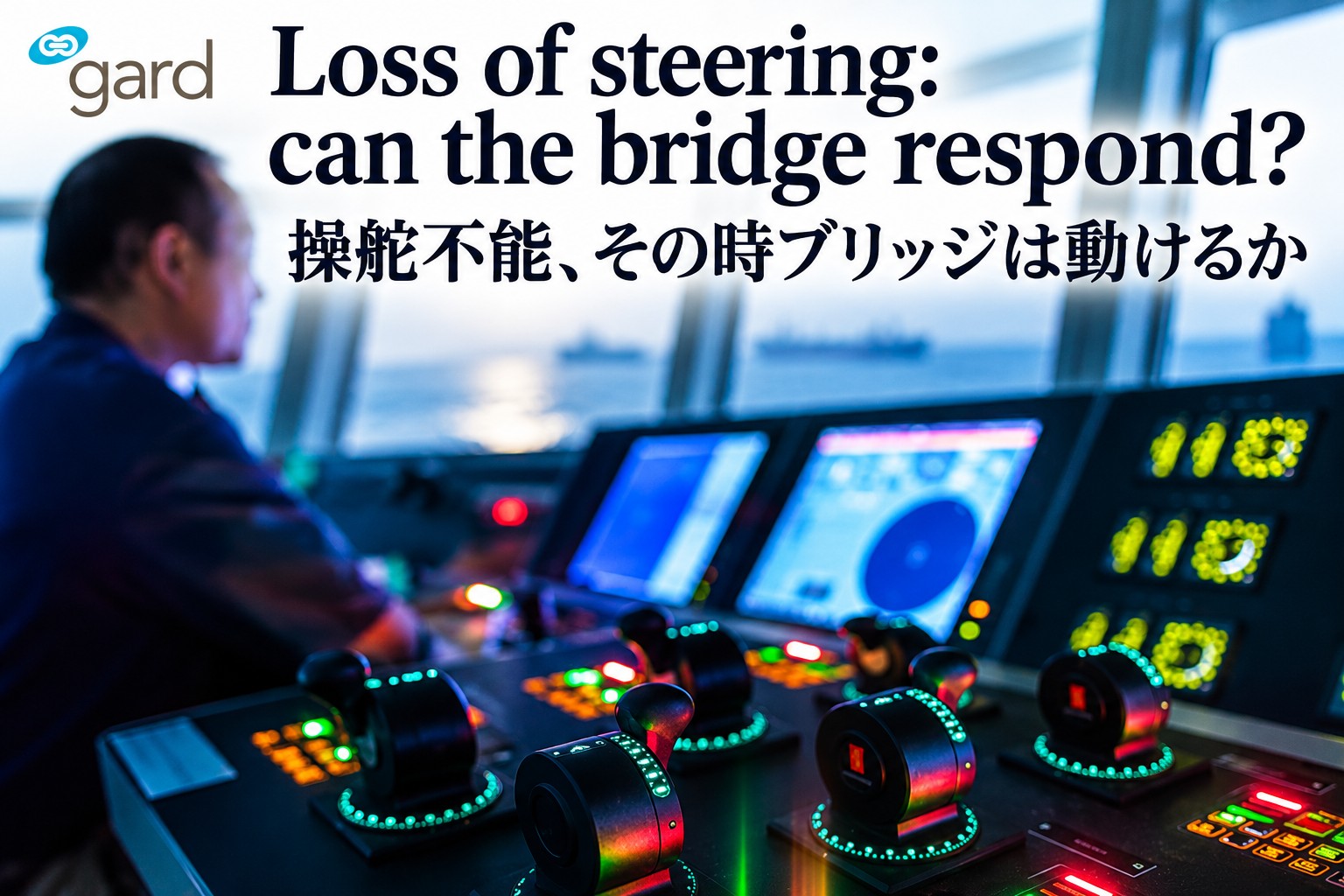
Gard warns of gap between “knowing” and “using” back-up steering
Gardが事故例から警鐘、バックアップ操舵「知っている」と「使える」の差
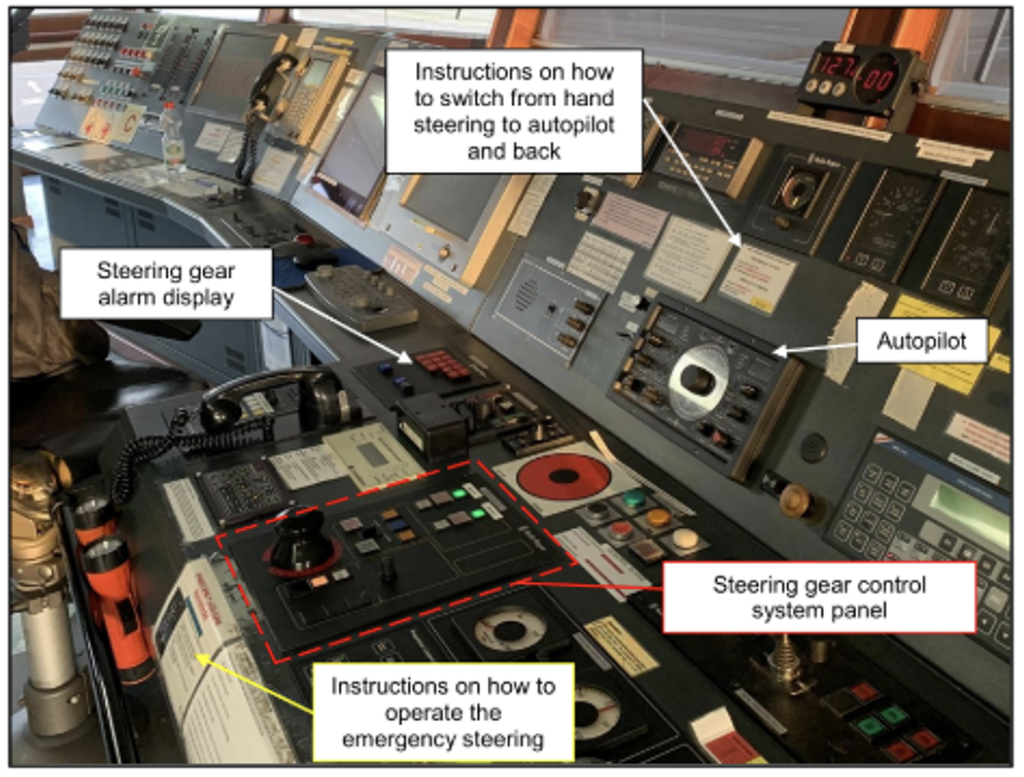
Ship steering systems are highly reliable. That is precisely why, when they suddenly fail, whether the crew can immediately switch to back-up steering can determine the outcome of an accident.
A report published on September 4 by Norwegian marine insurer Gard highlights, through actual collision and grounding accidents, the risks that lie at the “human-machine interface” when moving from FU (Follow-Up) to NFU (Non-Follow-Up) and then to emergency steering. Its findings also offer important lessons for Japanese shipowners and shipmanagement companies.
Original source: Gard, “Loss of bridge control: Calling on back-up modes” (published September 4, 2026)
■The full article covers the following points (approximately 2,000 Japanese characters)
→ Just 90 seconds to collision: why were 9 lives lost when the NFU system was functioning normally?
→ 2 and a half minutes from loss of steering to grounding: the “automatic switch to NFU” that the crew did not know about
→ From bridge wing to centre control, and from manual steering to autopilot: the risk of losing steering control “at the moment of transfer”
→ SOLAS requires emergency steering drills at least once every 3 months; Gard goes further by calling for “practical drills on the bridge”
→ From “knowing” to “being able to use it immediately”: lessons from accidents for Japanese shipowners and shipmanagement companies on back-up steering
Photo courtesy of Gard, iStock
(Read the full subscriber-only article in English and Japanese. The Japanese article follows the English version.)
操舵不能、その時ブリッジは動けるか
Gardが事故例から警鐘、バックアップ操舵「知っている」と「使える」の差
船舶の操舵システムは高い信頼性を持つ。だからこそ、突然その機能を失った時、乗組員がバックアップ操舵へ即座に切り替えられるかが事故の明暗を分ける。
ノルウェーの海上保険大手ガード(Gard)が9月4日に公表したレポートは、実際の衝突・座礁事故を通じ、FU(Follow-Up)からNFU(Non-Follow-Up)、さらに非常操舵へ移行する際の「人と機械の接点」に潜むリスクを浮き彫りにした。日本の船主、船舶管理会社にとっても示唆に富む内容だ。
原文:Gard「Loss of bridge control: Calling on back-up modes」(2026年9月4日公表)
■記事本文では以下の内容を読むことができます(記事全文約2,000文字)
→ 衝突までわずか90秒、NFUは正常だったのになぜ9人の命が失われたのか
→ 舵が効かなくなってから座礁まで2分30秒、乗組員が知らなかった「自動NFU切り替え」
→ ブリッジウイングから中央へ、手動からオートパイロットへ――「切り替えの瞬間」に潜む操舵不能リスク
→ SOLASが求める3カ月に1回の非常操舵訓練、Gardがさらに提起する「ブリッジ上の実践訓練」
→ 「知っている」から「即座に使える」へ、日本の船主・船舶管理会社が事故から学ぶべきバックアップ操舵の教訓
(続きは英語と日本語で書かれた有料版の本文でお読みください。日本語の記事は英文記事に続いて掲載されています)
- Swire and NORDEN shift competitive focus towards project logistics スワイヤーとノルデン、プロジェクト物流へ競争軸を移す
- Greek owner IONIC sends Japan-built Aframax for 3rd survey ギリシャ船主アイオニック、日本建造アフラマックスを第3回特別検査へ
関連記事
-
 〆 Inside Report Diverging Views Over New Fuels, MOL’s Hashimoto responds to Maersk「LNG燃料への課金」は是か非か
 -
〆 Inside Report: Why USTR’s New Tariffs Target All Car Carriers Worldwide USTR、全世界の海運会社のPCTC対象の「なぜ」
-
〆 Union Maritime Hosts Second Anniversary Reception in Tokyo:英ユニオンマリタイムが日本事務所設立2周年記念パーティーを開催。
-
〆 Clarksons Japan Hosts Spring BBQ for Japanese Maritime Stakeholders:クラークソンズ、日本の海事関係者を招きBBQ開催
-
〆Osaka Gas makes first LNG bunkering to MOL’s dedicated iron ore carrier — 大阪ガス、商船三井のLNG燃料鉄鋼原料船に初供給
-
〆INSIDE REPORT: Imabari Shipbuilding sees 2,134 Training Program plans revoked. 技能実習法違反、今治造船だけの問題か。
-
〆 INSIDE REPORT TSUNEISHI Block Loading the Compay’s First Methanol-Fuelled Ship 常石造船、初のメタノール燃料船を建造
-
〆 Inside Report An Exodus from Japan’s Trading Houses’ Shipping Divisions: “止まらない日本の商社船舶部の人材流出