Reportage: Japanese Shipowners No. 42 第42回ルポルタージュ日本船主
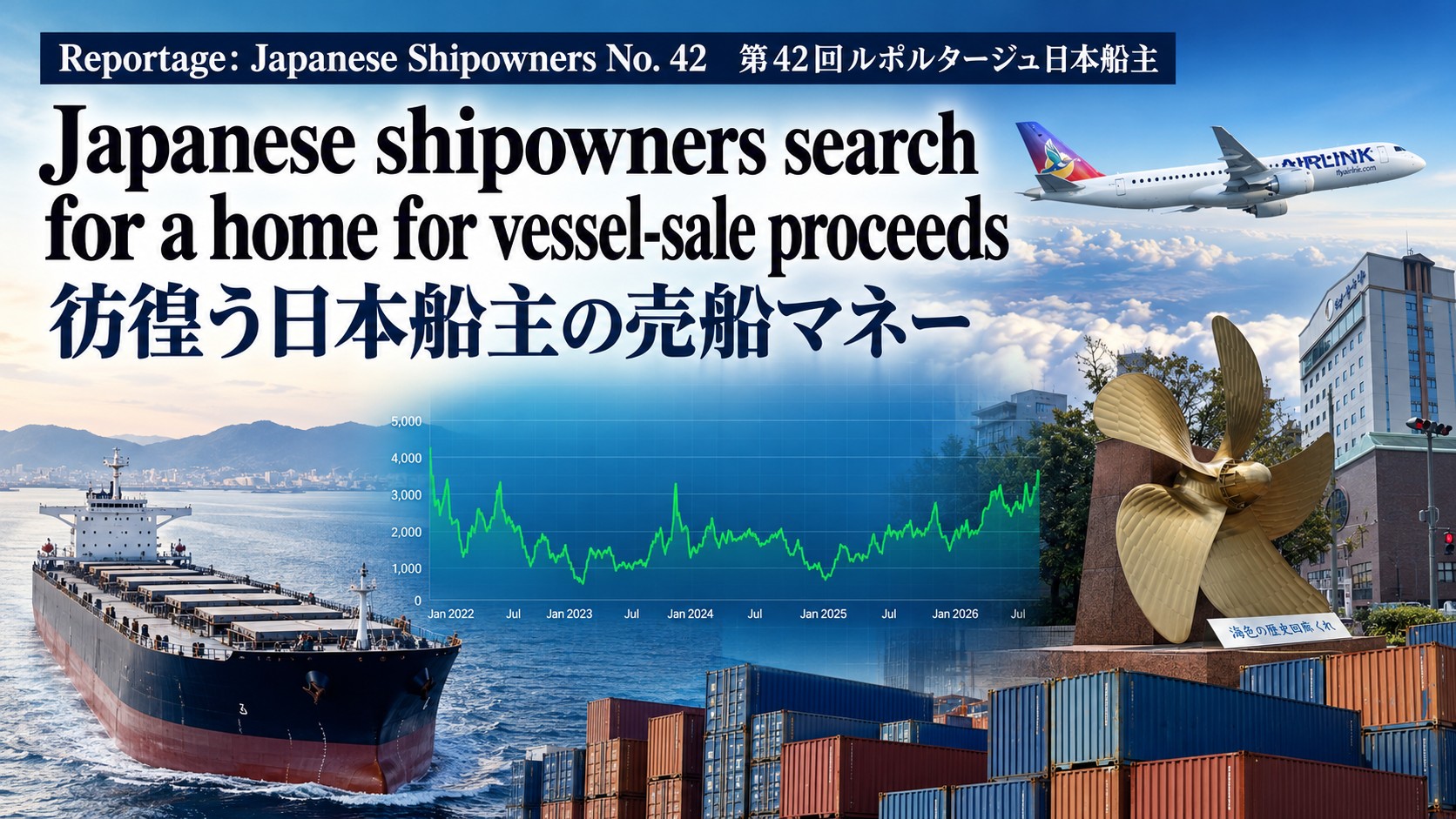
Japanese shipowners search for a home for vessel-sale proceeds
彷徨う日本船主の売船マネー
”The yen remains weak at around Y157 to the dollar, broadly in line with our expectations, while operators are exercising purchase options to acquire vessels we own, bringing the sale proceeds into the company. To be frank, cash just keeps accumulating, but newbuilding and secondhand vessel prices are too high for us to reinvest.”
September 19-23. Japan entered its five-day “Silver Week” holiday, with the weekend and public holidays combining to create an extended break. On September 24, immediately after the holiday, I met a Japanese shipowner visiting Tokyo from Shikoku at a coffee shop near Kanda Station.
The shipowner continued.
”Put simply, Japanese oceangoing shipowners are in a position where they have ‘surplus cash in yen terms’. But that is only on the surface. Unless we reinvest in newbuildings or other assets and defer taxation, profits are subject to corporate tax at an effective rate of around 30 per cent.
”Most shipowners defer taxation by using tax relief measures for vessel replacement and similar schemes, so once the tax is ultimately paid, very little of the profit remains in the company.”
A weak yen and strong shipping markets.
Against what could be described as exceptionally favourable conditions for Japanese shipowners, what exactly is happening?
■The full article covers the following points (approximately 3,000 Japanese characters)
→ Why Japanese shipowners are finding it difficult to reinvest even as cash from vessel sales accumulates
→ A $74mn Capesize: the high vessel prices and financing hurdles confronting Japanese shipowners
→ Why soaring markets bring only limited immediate benefits to Japanese shipowners reliant on long-term charters
→ Where does the money go when it cannot be invested in ships? Aircraft and container leasing emerge as alternative options
→ Beyond “investment for tax purposes”: the choices facing Japanese shipowners as they prepare for the next shipping cycle
(Continue reading the full subscriber-only article in English and Japanese. The Japanese version follows the English article.)
第42回ルポルタージュ日本船主 彷徨う日本船主の売船マネー
「為替は1ドル=157円前後と想定通り円安水準が続き、パーチェス・オプション(船舶購入選択権)で保有船はオペレーターが購入し、その売却益が会社に入る。正直、キャッシュばかり積み上がるが、新造船価格や中古船価格が高すぎて再投資できない」
9月19日-23日。日本は土日と祝日・休日が重なった5連休となり、「シルバーウィーク」(大型連休)に入った。直後の24日、四国から東京に出張に来た日本船主と神田駅近くの喫茶店で落ち合った。
同船主が続ける。
「端的に言えば、日本の外航船主は『円ベースでのキャッシュが余っている』状況だ。しかし、これは見せかけだ。新造船などに再投資して課税を繰り延べなければ、利益には実効税率約30%の法人税がかかる。大半の船主は船舶の買換特例などを活用して課税を繰り延べているため、最終的に税金を支払えば利益はほとんど会社に残らない」
円安、市況高-。
空前の好況といってもいい日本船主を取り巻く環境で、一体何が起きているのだろうか。
■記事本文では以下の内容を読むことができます(記事全文約3,000文字)
→ 売船でキャッシュは積み上がる。それでも日本船主が「再投資できない」理由
→ 7400万ドルのケープサイズ、日本船主が直面する高船価と融資の壁
→ 市況は高騰しても恩恵は限定的、長期用船を支えてきた日本船主のジレンマ
→ 船に投資できない資金はどこへ向かうのか、航空機・コンテナにも広がる選択肢
→ 「節税のための投資」の先へ、次の海運サイクルを見据えた日本船主の一手
(続きは英語と日本語で書かれた有料版の本文でお読みください。日本語の記事は英文記事に続いて掲載されています)
- K Line's PETRONAS LNG carrier "Puteri Kelantan" delivered 川崎汽船、PETRONAS向けLNG船「Puteri Kelantan」竣工
- Monjasa brings Japan into MOST for first time モンジャサ、MOSTに初めて日本を組み入れ
関連記事
-
 〆 Inside Report Diverging Views Over New Fuels, MOL’s Hashimoto responds to Maersk「LNG燃料への課金」は是か非か
 -
〆 Inside Report: Why USTR’s New Tariffs Target All Car Carriers Worldwide USTR、全世界の海運会社のPCTC対象の「なぜ」
-
〆 Union Maritime Hosts Second Anniversary Reception in Tokyo:英ユニオンマリタイムが日本事務所設立2周年記念パーティーを開催。
-
〆 Clarksons Japan Hosts Spring BBQ for Japanese Maritime Stakeholders:クラークソンズ、日本の海事関係者を招きBBQ開催
-
〆Osaka Gas makes first LNG bunkering to MOL’s dedicated iron ore carrier — 大阪ガス、商船三井のLNG燃料鉄鋼原料船に初供給
-
〆INSIDE REPORT: Imabari Shipbuilding sees 2,134 Training Program plans revoked. 技能実習法違反、今治造船だけの問題か。
-
〆 INSIDE REPORT TSUNEISHI Block Loading the Compay’s First Methanol-Fuelled Ship 常石造船、初のメタノール燃料船を建造
-
〆 Inside Report An Exodus from Japan’s Trading Houses’ Shipping Divisions: “止まらない日本の商社船舶部の人材流出