VLCC shipping: Gulf of Oman STS capacity reaches its limits VLCC輸送、オマーン湾STSの処理能力が限界に
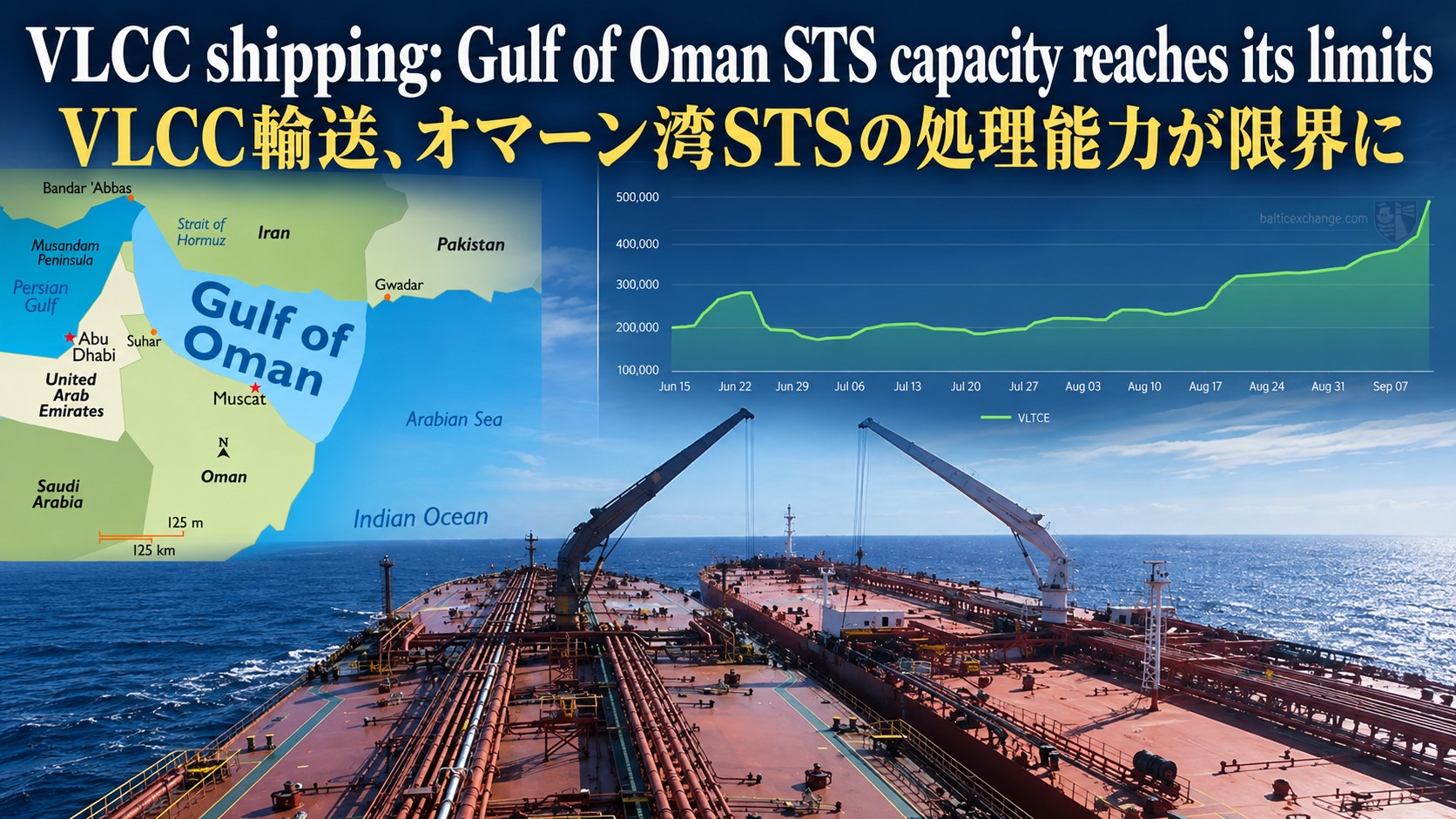
STS operations tie up tonnage, adding new pressure to VLCC supply and demand
積み替え拠点の分散で船腹拘束、VLCC需給に新たな圧力
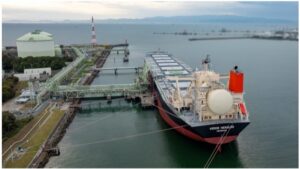
Disruption surrounding the Strait of Hormuz is exposing a new bottleneck in Middle East crude shipping. Attention is shifting from the strait itself to STS (Ship-to-Ship) transfer capacity beyond it.
■The full article covers the following points (approximately 2,000 Japanese characters)
→ Middle East crude shipping is changing amid disruption in the Strait of Hormuz, with Gulf of Oman STS emerging as the next bottleneck
→ Crude transferred by STS outside the Strait of Hormuz exceeds 4.6mn barrels per day, as offshore transfers expand rapidly within just a few months
→ VLCCs face longer periods tied up waiting for STS operations, while the Oman-China VLCC TCE rises above $870,000 per day
→ Changes are also reaching crude shipments bound for Japan, with transfers to VLCCs at locations including Linggi in Malaysia emerging as a practical option
→ A new dynamic is reshaping VLCC supply and demand, shifting the focus from “how many barrels can be transported” to “how many days a vessel is tied up”
(Read the full story in the paid edition, available in English and Japanese. The Japanese article follows the English version.)
VLCC輸送、オマーン湾STSの処理能力が限界に
積み替え拠点の分散で船腹拘束、VLCC需給に新たな圧力
ホルムズ海峡を巡る混乱が、中東原油輸送の新たなボトルネックを浮かび上がらせている。焦点は海峡そのものから、通過後のSTS(Ship-to-Ship=洋上積み替え)能力へ移りつつある。
■記事本文では以下の内容を読むことができます(記事全文約2,000文字)
→ ホルムズ海峡の混乱で変わる中東原油輸送、次のボトルネックとして浮上した「オマーン湾STS」
→ ホルムズ海峡外のSTS原油は日量460万バレル超、わずか数カ月で急拡大した洋上積み替え
→ STS待ちでVLCCの拘束時間が長期化、Oman-Chinaの収益指標は日量87万ドル超へ
→ 日本向け原油にも変化、マレーシアのLinggiなどでVLCCへの積み替えが現実の選択肢に
→ 「何バレル運ぶか」から「何日間船を拘束するか」へ、VLCC船腹需給を変える新たな構造
(続きは英語と日本語で書かれた有料版の本文でお読みください。日本語の記事は英文記事に続いて掲載されています)
- NYK names new LNG carrier "DIAMOND GAS NEXUS" for DGE 日本郵船、DGE向け新造LNG船「DIAMOND GAS NEXUS」命名
- South Korea commits $150bn to shipbuilding, Hanwha builds in US 韓国、造船協力に1,500億ドル ハンファ米国建造へ
関連記事
-
 〆 Inside Report Diverging Views Over New Fuels, MOL’s Hashimoto responds to Maersk「LNG燃料への課金」は是か非か
 -
〆 Inside Report: Why USTR’s New Tariffs Target All Car Carriers Worldwide USTR、全世界の海運会社のPCTC対象の「なぜ」
-
〆 Union Maritime Hosts Second Anniversary Reception in Tokyo:英ユニオンマリタイムが日本事務所設立2周年記念パーティーを開催。
-
〆 Clarksons Japan Hosts Spring BBQ for Japanese Maritime Stakeholders:クラークソンズ、日本の海事関係者を招きBBQ開催
-
〆Osaka Gas makes first LNG bunkering to MOL’s dedicated iron ore carrier — 大阪ガス、商船三井のLNG燃料鉄鋼原料船に初供給
-
〆INSIDE REPORT: Imabari Shipbuilding sees 2,134 Training Program plans revoked. 技能実習法違反、今治造船だけの問題か。
-
〆 INSIDE REPORT TSUNEISHI Block Loading the Compay’s First Methanol-Fuelled Ship 常石造船、初のメタノール燃料船を建造
-
〆 Inside Report An Exodus from Japan’s Trading Houses’ Shipping Divisions: “止まらない日本の商社船舶部の人材流出