What “10% ROE” and “1x PBR” Mean for Japan’s Major Shipping Groups 海運大手にとって「ROE10%」「PBR1倍」の意味とは

Sunday Column 日曜コラム
The equity capital of Japan’s three major shipping groups reached record highs in the fiscal year ending March 2026. What, then, do “10% ROE” and “1x PBR” actually mean for the country’s leading shipping companies?
■Readers can access the following content in the full article (approximately 2,000 Japanese characters)
→The equity capital of Japan’s three major shipping groups has expanded to roughly seven times pre-pandemic levels. The article examines how far the companies remain from the market benchmarks of “10% ROE” and “1x PBR”.
→Why do shipping shares continue to trade below 1x PBR despite strong profitability? The article analyses the relationship between rapidly expanding equity capital and market capitalisation.
→An explanation of how the enormous equity-method profits generated by Ocean Network Express (ONE) have transformed the financial structures of Japan’s major shipping groups.
→What lies behind the growing emphasis on “ROIC management” at Nippon Yusen Kabushiki Kaisha (NYK Line), Mitsui O.S.K. Lines, Ltd. (MOL), and Kawasaki Kisen Kaisha, Ltd. (K Line).
→Is shipping really a traditional “heavy industry”? The article explores the strengths of Japan’s maritime cluster model, encompassing logistics, finance and shipbuilding.
(The remainder of the article can be read in both English and Japanese. The Japanese-language version follows the English article.)
海運大手にとって「ROE10%」「PBR1倍」の意味とは
日曜コラム
2026年3月期に海運大手3社の自己資本は過去最高水準に達した。海運大手3社にとって果たして「ROE10%」「PBR1倍」とはどのような意味を持っているのだろうか。
■記事本文では以下の内容を読むことができます(記事全文約2,000文字)
→海運大手3社の自己資本は、コロナ前から約7倍規模へ拡大。市場が求める「ROE10%」「PBR1倍」との距離感を読み解く。
→なぜ海運株は高収益でもPBR1倍を下回るのか。急拡大した自己資本と時価総額の関係を整理。
→ONEの巨額持分法利益が、日本の海運大手の財務構造をどう変えたのかを解説。
→日本郵船、商船三井、川崎汽船が重視し始めた「ROIC経営」の背景とは何か。
→海運は本当に「重厚長大産業」なのか。物流・金融・造船を含めた日本型「海事クラスター」の強みを考察。
(続きは英語と日本語で書かれた本文でお読みください。日本語の記事は英文記事に続いて掲載されています)
- Stolt and Odfjell Highlight Diversification Strength Amid Hormuz Crisis ストルトとオドフェル、ホルムズ危機で際立つ多角経営
- Scorpio Tankers’ Net Profit Surges to $216m スコルピオ・タンカーズ、純利益2億1600万ドルへ急増
関連記事
-
 〆 Inside Report Diverging Views Over New Fuels, MOL’s Hashimoto responds to Maersk「LNG燃料への課金」は是か非か
 -
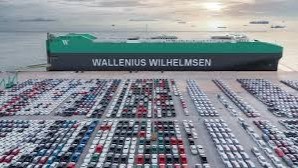
〆 Inside Report: Why USTR’s New Tariffs Target All Car Carriers Worldwide USTR、全世界の海運会社のPCTC対象の「なぜ」
-
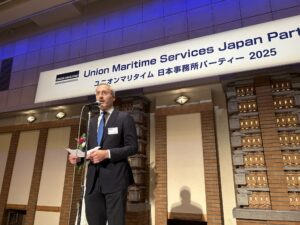
〆 Union Maritime Hosts Second Anniversary Reception in Tokyo:英ユニオンマリタイムが日本事務所設立2周年記念パーティーを開催。
-
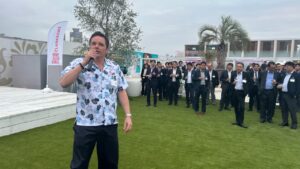
〆 Clarksons Japan Hosts Spring BBQ for Japanese Maritime Stakeholders:クラークソンズ、日本の海事関係者を招きBBQ開催
-
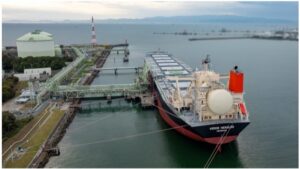
〆Osaka Gas makes first LNG bunkering to MOL’s dedicated iron ore carrier — 大阪ガス、商船三井のLNG燃料鉄鋼原料船に初供給
-
〆INSIDE REPORT: Imabari Shipbuilding sees 2,134 Training Program plans revoked. 技能実習法違反、今治造船だけの問題か。
-
〆 INSIDE REPORT TSUNEISHI Block Loading the Compay’s First Methanol-Fuelled Ship 常石造船、初のメタノール燃料船を建造
-
〆 Inside Report An Exodus from Japan’s Trading Houses’ Shipping Divisions: “止まらない日本の商社船舶部の人材流出

コメント