Kpler highlights practical use of MarineTraffic at Sea Japan ケプラー、Sea Japanでマリントラフィック実務活用を前面に

On-site account setup and live demonstrations to accelerate adoption
アカウント即時開設とライブデモで導入加速へ
Kpler, which provides the maritime data platform MarineTraffic, will offer support for the creation of corporate accounts and initial setup for visitors at Sea Japan 2026, to be held at Tokyo Big Sight from 22 to 24 April 2026. At its booth (4F-04), the company will establish an environment where services can be activated on the spot, and will present concrete applications for day-to-day operations through live demonstrations and seminars.
ケプラー、Sea Japanでマリントラフィック実務活用を前面に
アカウント即時開設とライブデモで導入加速へ
海上データプラットフォームMarineTrafficを提供するKplerは、2026年4月22日から24日まで東京ビッグサイトで開催されるSea Japan 2026において、来場者向けに法人アカウントの作成および初期設定のサポートを実施する。ブース(4F-04)では、その場でサービス利用を開始できる環境を整備し、ライブデモやセミナーを通じて実務活用の具体像を提示する。
Corporate usage in the Japanese market is expanding rapidly. According to the company, the number of organisations adopting the platform, which stood at around 20 as of 2024, has now increased to more than 150. Use cases span a wide range, including add-on functions such as risk and compliance, container intelligence, and email solutions. The exhibition will provide an integrated experience covering “from implementation to operational use”.
At the booth, industry-specific use cases will be presented in a demonstration format, including safe navigation and accident prevention for shipowners, delay assessment and voyage optimisation for charterers, sales, design and compliance applications for manufacturers, risk and exposure monitoring in the financial and insurance sectors, transport visibility in logistics, and market analysis for brokers. The structure will emphasise not merely the visualisation of positional data, but its function as a decision-support tool.
At 12:00 on 24 April (West Hall 4, Venue F), a seminar titled “Practical Applications of MarineTraffic Widely Used in Japan and Globally – Industry-specific Use Cases and Applications in the Risk and Compliance Domain for Manufacturers and Finance” will be held. Yu Yamada, Maritime Representative, will explain industry-specific use cases, while Kota Oyama, formerly of Lloyd’s List Intelligence, will focus on the risk and compliance domain and introduce the background to adoption and practical applications among manufacturers and financial institutions.
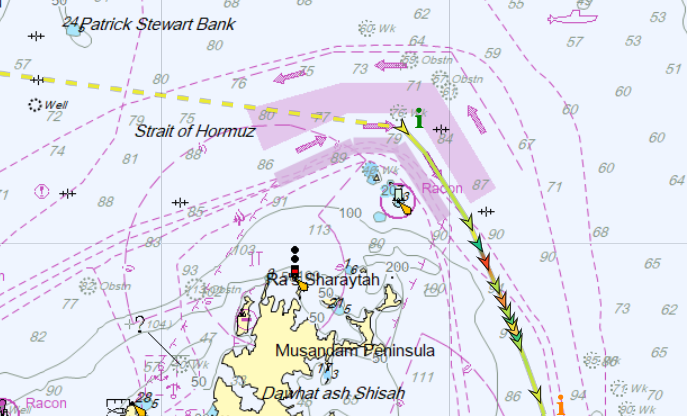
In light of the current situation in the Middle East, the company is also considering the provision of information related to developments surrounding the Strait of Hormuz. Since March 2026, rising transit risks and operational constraints for certain vessel types have been reported in the strait, with vessels increasingly remaining at anchor or altering course. In such an uncertain environment, MarineTraffic has become an important data source for media and specialists to visualise “the reality at sea”.
It is being used not only to grasp real-time transit movements, but also to identify anomalies in AIS signals and signs of interference, and to analyse behaviours such as the falsification of vessel destinations and changes in declared affiliations. Cases have also been noted in which discrepancies arise between data and on-the-ground realities due to electronic interference or deliberate signal suppression, meaning that a high level of expertise is required in interpreting the data.
The exhibition and seminar are characterised by their focus on going as far as “how to read the data”. Rather than a simple introduction to tools, the content is expected to be framed with a view to application in practical decision-making under geopolitical risk.
■Integrated support from implementation to operational use
The most notable feature this time lies in the provision of end-to-end support, from
account setup through to practical utilisation. Traditionally, maritime data services have faced challenges in ensuring adoption after implementation, but the company aims to lower barriers by combining immediate setup within the booth with live demonstrations.
In the Japanese market, expansion among non-traditional users such as manufacturers and financial institutions, in addition to shipping companies, has been pronounced, making the presentation of cross-industry use cases essential. The exhibition is positioned as a response to this trend.
■Rising demand in risk and compliance
Behind the expansion in usage lies a growing need to respond to sanctions risks and issues related to the dark fleet. In order to identify discrepancies between the actual behaviour of vessels and their registered information, the establishment of monitoring frameworks combining AIS data with various analytical functions is being required.
For financial institutions and insurance companies as well, the importance of such data is rising rapidly in understanding portfolio risk and enhancing credit decision-making. The seminar is expected to present case studies aligned with practical needs.
■The Hormuz situation highlights the “value of data”
The situation in the Strait of Hormuz in the spring of 2026 has once again brought into sharp relief the strategic importance of maritime data. Even as uncertainty surrounding transit conditions increases, some tankers have continued operations, while the prolonged stagnation of LNG carriers has underscored differences depending on vessel type and cargo.
As a means of visualising the situation and linking it to decision-making, the value of platforms such as MarineTraffic is increasing further. The exhibition will provide an opportunity to present this practical significance in concrete terms.
■Reporter’s View
Maritime data use may mark a turning point in Japan Text by Hirofumi Yamamoto
Kpler’s exhibition on this occasion has the potential to go beyond mere promotion and signal a “turning point in the use of maritime data” in the Japanese market. Traditionally, AIS data in Japan’s shipping industry has often been treated as supplementary information.
However, in situations where geopolitical risk becomes manifest, as in the Strait of Hormuz,
the ability to grasp in real time “which vessels are where and doing what” can directly determine business continuity itself.
Of particular note is the company’s strengthening of its outreach to non-shipping players such as manufacturers and financial institutions. This suggests that maritime data is evolving from a simple operational support tool into a risk management infrastructure for the entire supply chain. The increase in the number of adopting organisations in the Japanese market also underpins this structural shift.
The strategy of presenting both the “implementation experience” and “practical application” simultaneously at Sea Japan is highly rational. How far Japanese companies can incorporate such data into decision-making may well become a decisive factor in competitiveness going forward.
ケプラー、Sea Japanでマリントラフィック実務活用を前面に
アカウント即時開設とライブデモで導入加速へ
海上データプラットフォームMarineTrafficを提供するKplerは、2026年4月22日から24日まで東京ビッグサイトで開催されるSea Japan 2026において、来場者向けに法人アカウントの作成および初期設定のサポートを実施する。ブース(4F-04)では、その場でサービス利用を開始できる環境を整備し、ライブデモやセミナーを通じて実務活用の具体像を提示する。
日本市場における法人利用は急速に拡大している。同社によると、2024年時点で約20だった導入組織は、現在では150以上に増加している。リスク&コンプライアンス、コンテナインテリジェンス、メールソリューションといったアドオン機能も含め、用途は多岐にわたる。今回の展示では「導入から実務運用まで」を一体的に体験できる場を提供する。
ブースでは、船会社の安全運航・事故防止、用船者の遅延判断や運航最適化、メーカーの営業・設計・コンプライアンス対応、金融・保険分野におけるリスク・エクスポージャー監視、物流の輸送可視化、ブローカーの市場分析など、業界別ユースケースをデモンストレーション形式で提示する。単なる位置情報の可視化にとどまらず、意思決定支援ツールとしての機能を前面に打ち出す構成となる。
4月24日12時(西4ホールF会場)には、「日本・世界で広く利用されるマリントラフィックの実務活用 ― 業種別の使用目的と、リスク・コンプライアンス領域におけるメーカー・金融の活用事例 ―」と題したセミナーを開催する。マリタイム担当の山田優(Yu Yamada)氏が業界別ユースケースを解説するほか、元Lloyd’s List Intelligenceの大山光太(Kota Oyama)氏がリスク・コンプライアンス領域に焦点を当て、メーカーや金融機関における導入背景と実務活用事例を紹介する予定だ。
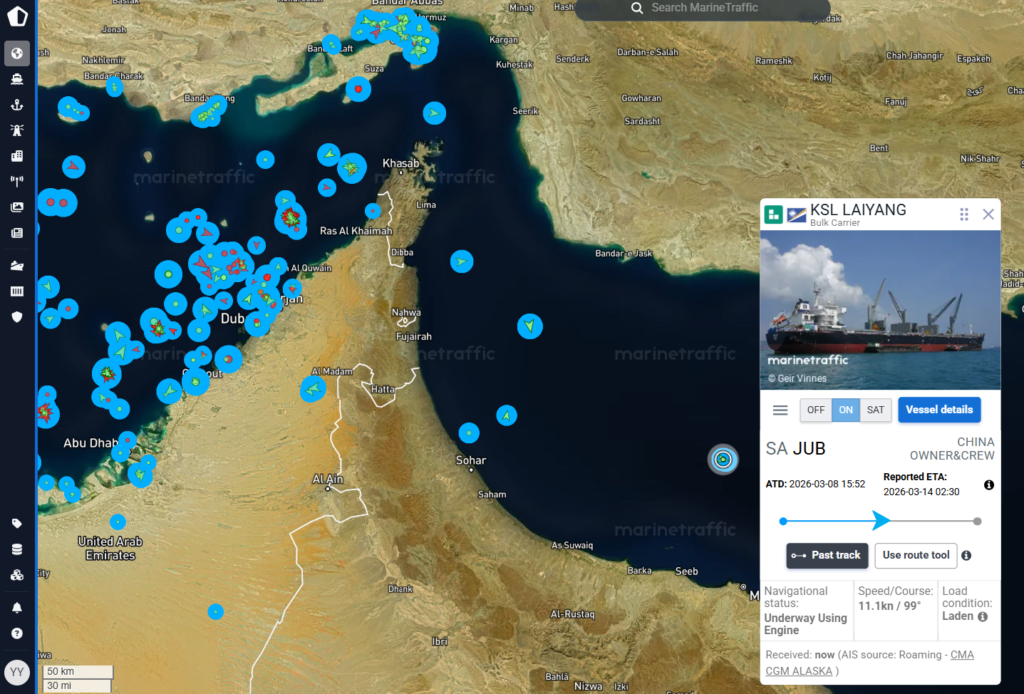
足元の中東情勢を踏まえ、同社はホルムズ海峡を巡る動向に関連した情報提供についても検討している。2026年3月以降、同海峡では通航リスクの高まりや一部船種における運航制約が指摘されており、船舶の滞留や進路変更が相次いでいる。こうした不透明な環境下で、MarineTrafficはメディアや専門家にとって「海上の実態」を可視化する重要なデータソースとなっている。
リアルタイムの通航動向の把握に加え、AIS信号の異常や妨害の兆候の把握、船舶の目的地偽装や所属表示の変化といった挙動の分析にも活用されている。電子妨害や意図的な信号遮断により、データと現場実態の乖離が生じるケースも指摘されており、データ解釈には高度な専門知識が求められる。
今回の展示とセミナーは、「データの読み解き方」まで踏み込む点に特徴がある。単なるツール紹介ではなく、地政学リスク下における実務判断への応用を視野に入れた内容となる見通しだ。
■導入から実務運用まで一体支援
今回の最大の特徴は、アカウント開設から実務活用までを一貫して支援する点にある。従来、海上データサービスは導入後の活用定着が課題とされてきたが、同社はブース内での即時セットアップとデモを組み合わせることで、導入障壁の低減を図る。
日本市場では、船社のみならずメーカーや金融機関など非伝統的ユーザーの拡大が顕著であり、業界横断的なユースケース提示が不可欠となっている。今回の展示はその流れに対応したものと位置付けられる。
■リスク・コンプライアンス需要が拡大
利用拡大の背景には、制裁リスクやダーク・フリート問題への対応ニーズの高まりがある。船舶の実際の行動と登録情報の乖離を把握するため、AISデータと各種分析機能を組み合わせた監視体制の構築が求められている。
金融機関や保険会社にとっても、ポートフォリオのリスク把握や与信判断の高度化において、こうしたデータの重要性は急速に高まっている。今回のセミナーでは、実務ニーズに即した事例が提示される見込みだ。
■ホルムズ情勢が示す「データの価値」
2026年春のホルムズ海峡情勢は、海上データの戦略的重要性を改めて浮き彫りにした。通航環境の不確実性が高まる中でも一部タンカーが航行を継続する一方、LNG船の滞留が長期化するなど、船種や貨物による差異が顕在化している。
状況を可視化し、意思決定に結び付ける手段として、MarineTrafficのようなプラットフォームの価値は一段と高まっている。今回の展示は、その実務的意義を具体的に提示する機会となる。
■記者の視点
海上データ活用、日本市場の転換点に Text by Hirofumi Yamamoto
今回のケプラーの展示は、単なるプロモーションの域を超え、日本市場における「海上データ活用の転換点」を示す可能性がある。従来、日本の海運業界ではAISデータは補助的な情報として扱われることが多かった。しかし、ホルムズ海峡のように地政学リスクが顕在化する局面では、「どの船が、どこで、何をしているか」をリアルタイムで把握する能力が、事業継続そのものを左右する。
注目すべきは、同社がメーカーや金融機関といった非海運プレイヤーへの展開を強めている点だ。これは、海上データが単なる運航支援ツールではなく、サプライチェーン全体のリスク管理インフラへと進化していることを意味する。日本市場における導入組織数の増加も、この構造変化を裏付ける。
Sea Japanという場で「導入体験」と「実務応用」を同時に提示する戦略は、極めて合理的だ。今後、日本企業がどこまでこのデータを意思決定に組み込めるかが、競争力の決め手となる可能性もありそうだ。
- NYK, Golden Island ,Yara to supply ammonia fuel in Singapore 日本郵船・Golden Island・Yara 星港でアンモニア燃料供給
- NS United Kaiun strikes methanol dual-fuel vessel deal with Rio Tinto NSU海運、リオ・ティントとメタノール二元燃料船契約
関連記事
-
 〆 Inside Report Diverging Views Over New Fuels, MOL’s Hashimoto responds to Maersk「LNG燃料への課金」は是か非か
 -
〆 Inside Report: Why USTR’s New Tariffs Target All Car Carriers Worldwide USTR、全世界の海運会社のPCTC対象の「なぜ」
-
〆 Union Maritime Hosts Second Anniversary Reception in Tokyo:英ユニオンマリタイムが日本事務所設立2周年記念パーティーを開催。
-
〆 Clarksons Japan Hosts Spring BBQ for Japanese Maritime Stakeholders:クラークソンズ、日本の海事関係者を招きBBQ開催
-
〆Osaka Gas makes first LNG bunkering to MOL’s dedicated iron ore carrier — 大阪ガス、商船三井のLNG燃料鉄鋼原料船に初供給
-
〆INSIDE REPORT: Imabari Shipbuilding sees 2,134 Training Program plans revoked. 技能実習法違反、今治造船だけの問題か。
-
〆 INSIDE REPORT TSUNEISHI Block Loading the Compay’s First Methanol-Fuelled Ship 常石造船、初のメタノール燃料船を建造
-
〆 Inside Report An Exodus from Japan’s Trading Houses’ Shipping Divisions: “止まらない日本の商社船舶部の人材流出



コメント