No. 37 Reportage: Japanese Shipowners 第37回 ルポルタージュ・日本船主
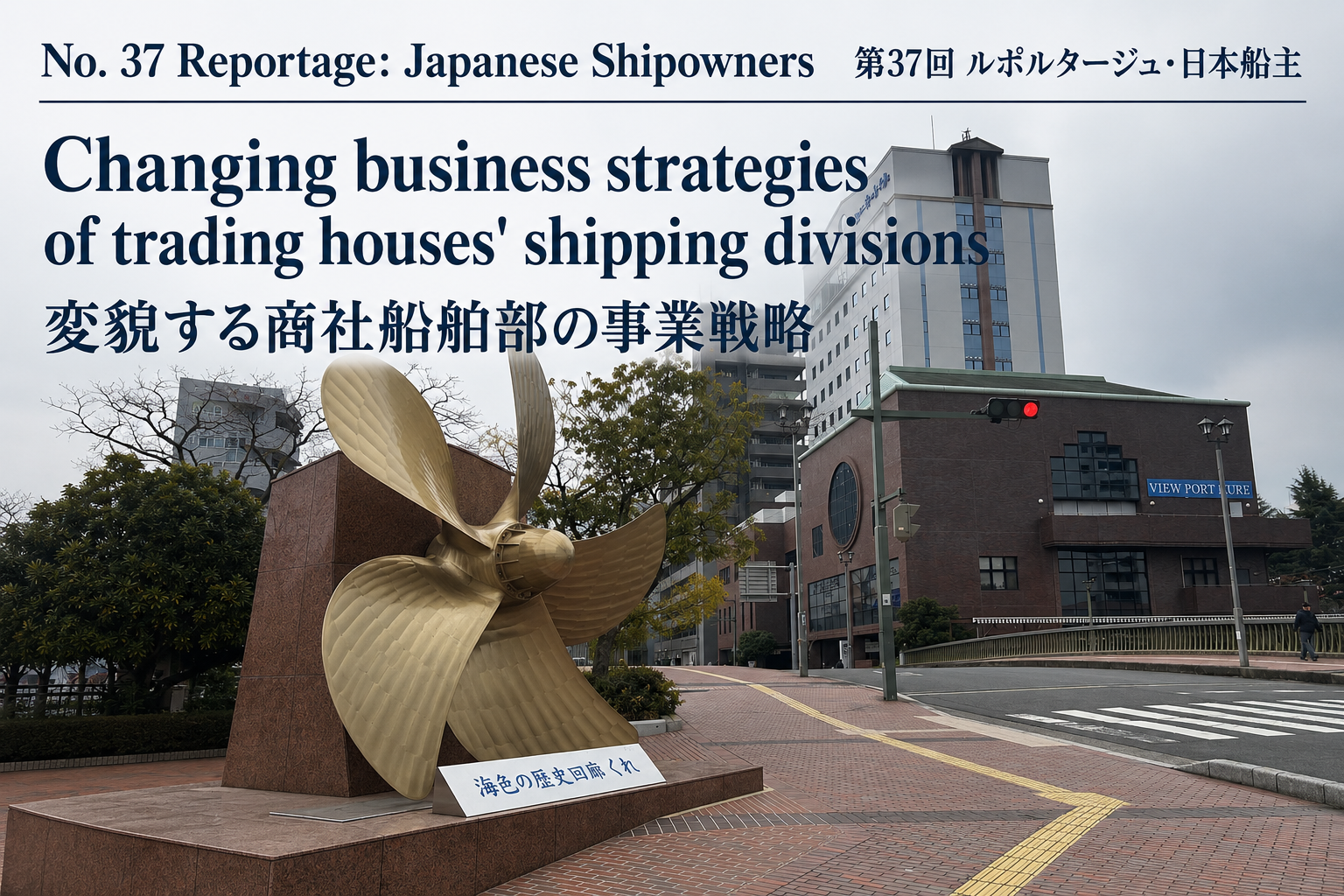
Changing business strategies of trading houses’ shipping divisions
変貌する商社船舶部の事業戦略
At lunchtime on the 19th, at a coffee shop near the Yaesu underground shopping area by Tokyo Station.
An executive familiar with the shipping business of Japanese trading houses says:
”Don’t you think the differences in the business strategies of trading houses’ shipping divisions have become increasingly clear recently? While their businesses still centre on traditional S&P (sale and purchase) brokerage and shipowning, my impression is that each company is now operating in a different field.”
Different fields.
The role of a trading house, or its shipping division, can be described as “untangling, connecting and solidifying”.
In other words, the traditional role of a trading house is to “untangle” the relationship between maritime players in different positions – “shipowners and shipyards” – “connect” them through a newbuilding contract, and finally “solidify” the relationship between the two sides.
But what the industry source said next came as a surprise to this reporter.
■The full article covers the following points (approximately 2,000 Japanese characters)
→ Why are the differences in business strategies among trading houses’ shipping divisions becoming more pronounced now?
→ How their approaches differ in brokerage, S&P, shipowning and dealings with Chinese shipyards
→ The challenges for subsequent vessel investment after asset plays based on “buying low and selling high”
→ Why “qualitative information” that cannot be captured by numbers is gaining value in the age of AI
→ What actual charter-hire reduction negotiations reveal about the importance of “personal networks” in the Japanese shipowner business
(Continue reading in the full subscriber-only article in English and Japanese. The Japanese article follows the English version.)
第37回 ルポルタージュ・日本船主
変貌する商社船舶部の事業戦略
19日昼、東京駅八重洲地下街の近くの喫茶店。
商社船舶部の関係者が話す。
「最近、商社船舶部の事業戦略の違いが鮮明になっていると思わないか。従来のS&P(売買船)の仲介、保有船事業を中心としながらも、各社とも異なるフィールドで活動しているというイメージだ」
異なるフィールド――。
商社、もしくは商社船舶部の仕事は「ほぐす、つなぐ、結ぶ」というイメージだ。
つまり、「船主と造船所」という立場の異なる海事関係者の関係を「ほぐし」、新造船発注という契約に「つなぎ」、最後は両者の関係を「結ぶ」という伝統的な商社の役割である。
しかし、次に同関係者が発した言葉は記者にとって意外な言葉だった。
■記事本文では以下の内容を読むことができます(記事全文約2,000文字)
→ 商社船舶部の事業戦略、なぜ今、各社の違いが鮮明になっているのか
→ 仲介、S&P、船舶保有、中国造船所への対応で分かれる各社の方向性
→ 「安く買って高く売る」アセットプレー、その後の船舶投資に残る課題
→ AI時代だからこそ価値を持つ、数字では見えない海運業界の「定性情報」
→ 用船料減額交渉の実例から見える、日本船主ビジネスにおける「人脈」の意味
(続きは英語と日本語で書かれた有料版の本文でお読みください。日本語の記事は英文記事に続いて掲載されています)
- Global ship buying shows no sign of slowing despite high prices 高船価でも止まらぬ「世界の買船」
- Can Motegi’s Middle East tour help secure Japan’s tanker routes? 茂木外相、中東歴訪で日本のタンカールート確保につながるか
関連記事
-
 〆 Inside Report Diverging Views Over New Fuels, MOL’s Hashimoto responds to Maersk「LNG燃料への課金」は是か非か
 -
〆 Inside Report: Why USTR’s New Tariffs Target All Car Carriers Worldwide USTR、全世界の海運会社のPCTC対象の「なぜ」
-
〆 Union Maritime Hosts Second Anniversary Reception in Tokyo:英ユニオンマリタイムが日本事務所設立2周年記念パーティーを開催。
-
〆 Clarksons Japan Hosts Spring BBQ for Japanese Maritime Stakeholders:クラークソンズ、日本の海事関係者を招きBBQ開催
-
〆Osaka Gas makes first LNG bunkering to MOL’s dedicated iron ore carrier — 大阪ガス、商船三井のLNG燃料鉄鋼原料船に初供給
-
〆INSIDE REPORT: Imabari Shipbuilding sees 2,134 Training Program plans revoked. 技能実習法違反、今治造船だけの問題か。
-
〆 INSIDE REPORT TSUNEISHI Block Loading the Compay’s First Methanol-Fuelled Ship 常石造船、初のメタノール燃料船を建造
-
〆 Inside Report An Exodus from Japan’s Trading Houses’ Shipping Divisions: “止まらない日本の商社船舶部の人材流出


コメント